In progressNew website: details may change. Our new website is still being built. Photographs and tour details may not yet be final, so please contact us or write to contact@pepinparis.com to confirm anything before you book.
Unveiling the restoration of Delacroix's masterpiece !
Le 28 juillet 1830. La Liberté guidant le peuple.
Journal · May 2024 · 5 min read · First published in Your guide in Paris
“ I have undertaken a modern subject, a barricaded street... and if I have not fought for my country, at least I will paint for it. ” - Delacroix, in a letter to his brother, 1830
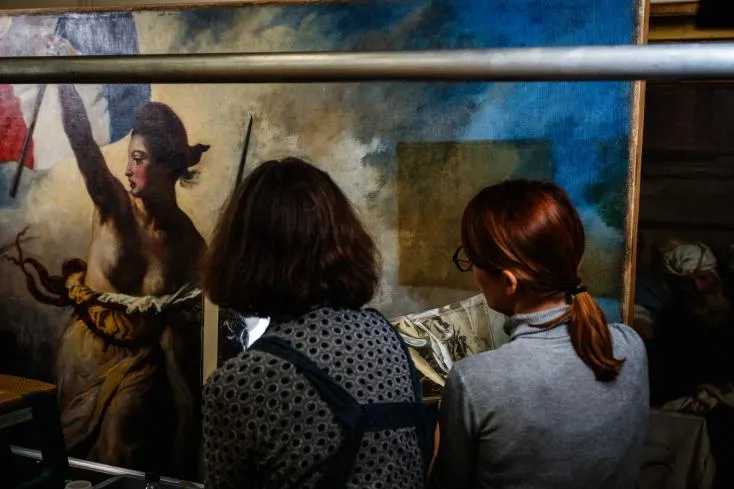
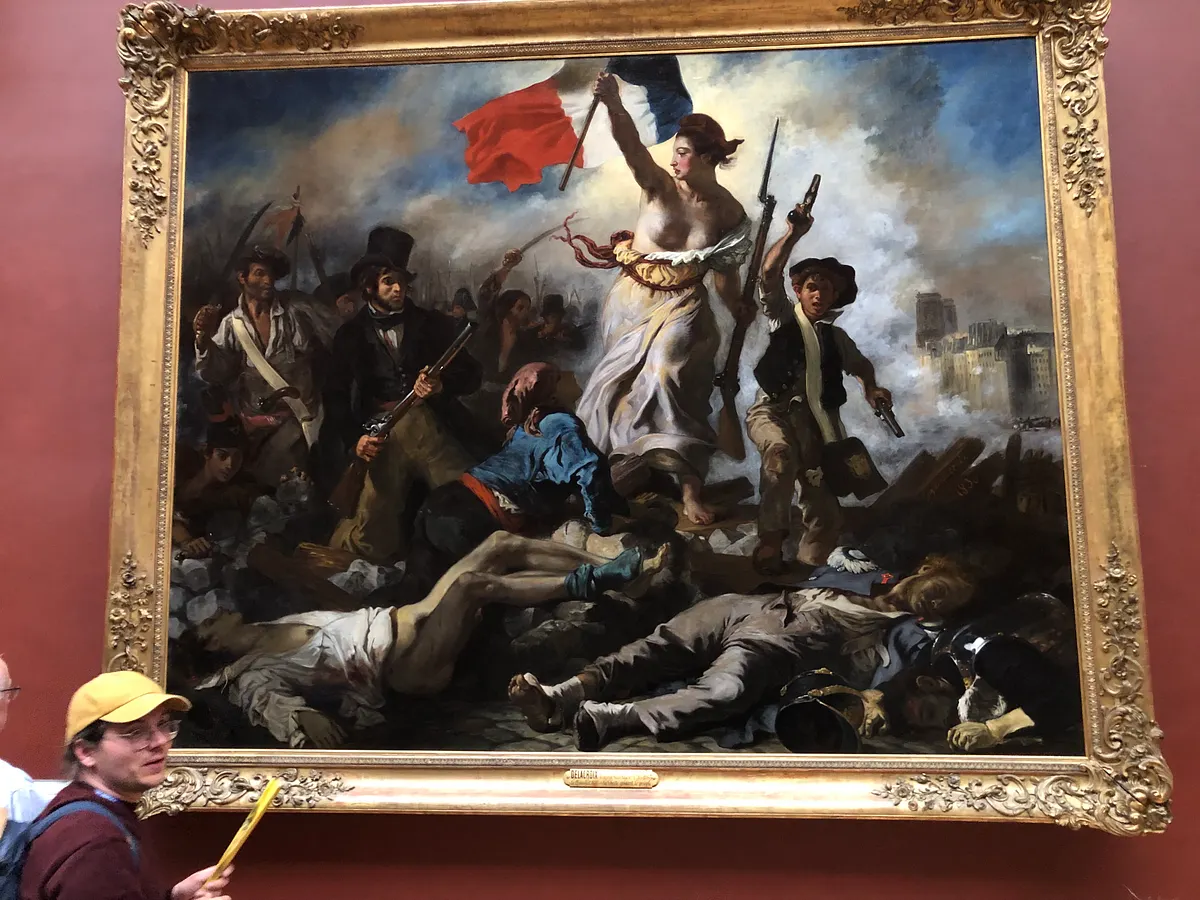
After six months of meticulous restoration, Eugène Delacroix’s iconic painting Liberty Leading the People has returned the 2nd of May to its rightful place in the Louvre Museum.
This occasion marks not only the revitalization of a national treasure but also offers a unique glimpse into the artistic processes and historical significance of this masterpiece.
A turning point for Delacroix’s career
By 1830, Delacroix was a renowned painter, but his career had stalled. The reluctant reception of his painting “The Death of Sardanapalus” in 1828 had taken its toll.
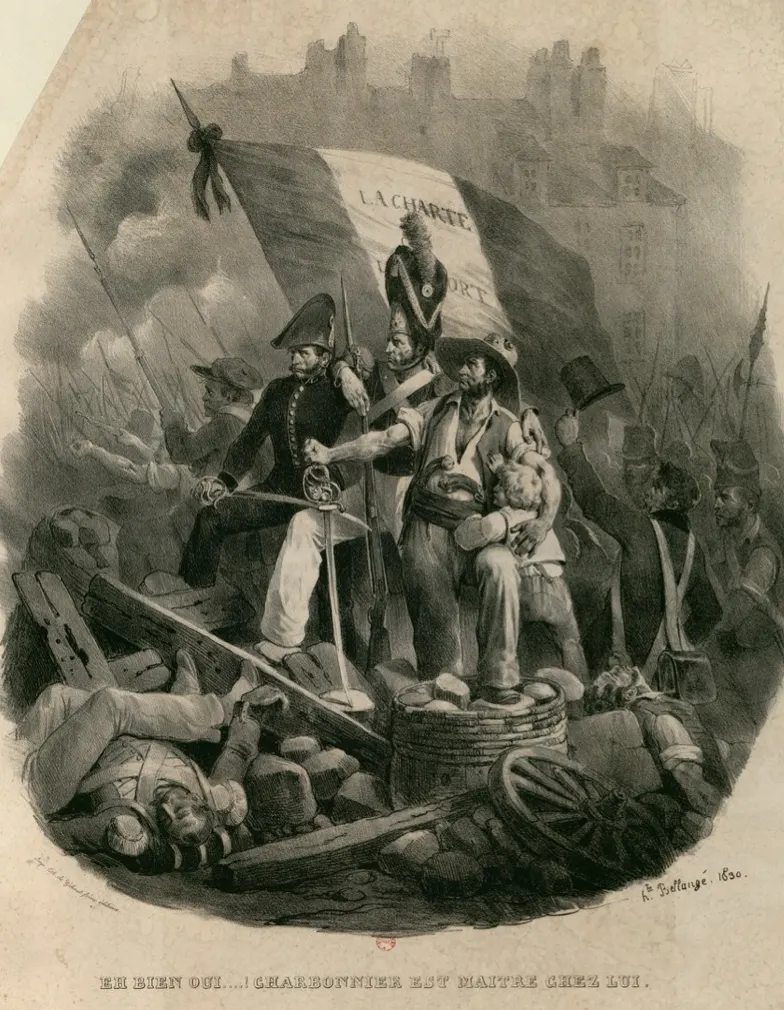
The outbreak of the Revolution of July (July 27, 28 and 29, 1830) was a turning point for Delacroix. Witnessing the fighting and popular fervor, he was deeply marked by this event that overthrew the monarchy of Charles X and placed Louis-Philippe on the throne.
As early as September 1830, Delacroix embarked on the creation of a monumental painting to commemorate the Revolution : Liberty Leading the People. He drew his inspiration from his direct experience of the events, but also from his previous works, notably “Scenes from the Massacres of Scio” (1822), where he depicts the Greeks’ struggle for independence.
Delacroix wanted to go beyond simply narrating the events and create a powerful symbolic image. He chose a pyramidal composition, with the barricade as the base, the figure of Liberty in the center, and the tricolor flag as the culminating point. Quite a symbol, knowing that the blue-white-red flag (proudly occupying the center of the painting) definitely replaced the white standard of the French monarchy after this Revolution of July !
Same energy, right ?
The realization of Liberty Leading the People was quick and intense. Delacroix completed the painting in December 1830, after only four months of work. The work testifies to his technical mastery and his sense of composition, while retaining the energy and enthusiasm of youth (he was 32 when he painted Liberty … I still have a year to get close to his talent !)
The need for restoration : preserving an artistic legacy
Eugène Delacroix is the painter who exploits to the maximum all the properties of colored material : he relies in a particularly original way on the juxtaposition of colors to model his volumes, animate his shadows, he plays with the states of the material – grainy, creamy, liquid – to give volume to the different layers, suggest textures, create transparencies.
Unfortunately, despite its enduring significance, Liberty Leading the People had succumbed to the effects of time and environmental factors. Even though the chassis (the framework) had been replaced in 1999, the last major restoration of the painting happened in 1949, 75 years ago !
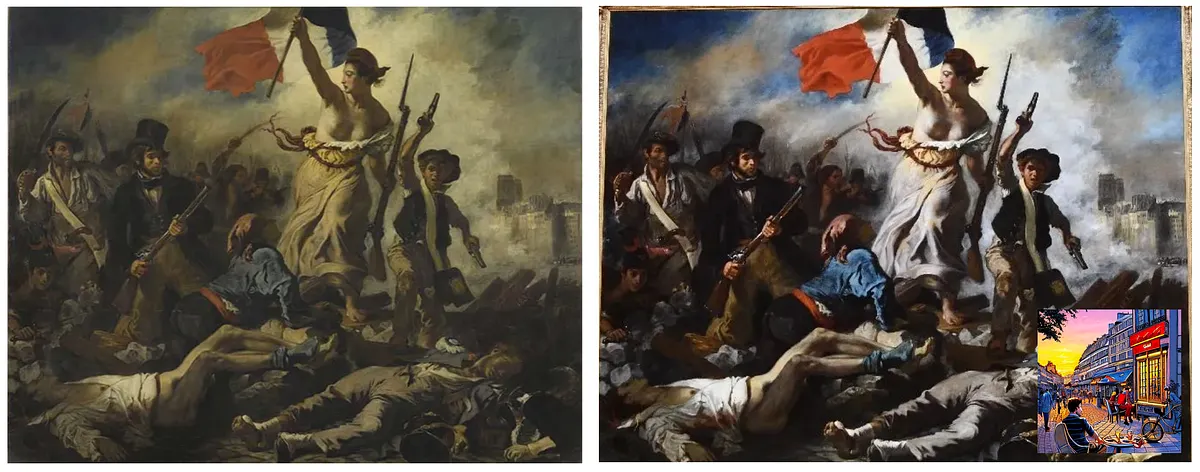
Over the decades, layers of varnish had yellowed, obscuring Delacroix’s original vibrant colors and intricate details. The canvas itself had also suffered from tears and abrasions, requiring careful attention to ensure its structural integrity.
A work of patience …
Unveiling the hidden beauty of the colors
The restoration project, supervised by the Louvre’s team of conservators and two restoration experts - Bénédicte Trémolières et Laurence Mugniot - involved a meticulous process of cleaning. Using fine brushes and specialized solvents, they carefully removed the accumulated layers of varnish, revealing the painting’s original colors and brushstrokes with remarkable clarity.
The meticulous restoration revealed new insights into Delacroix’s artistic genius.
A surprising discovery was the true color of Liberty’s tunic !
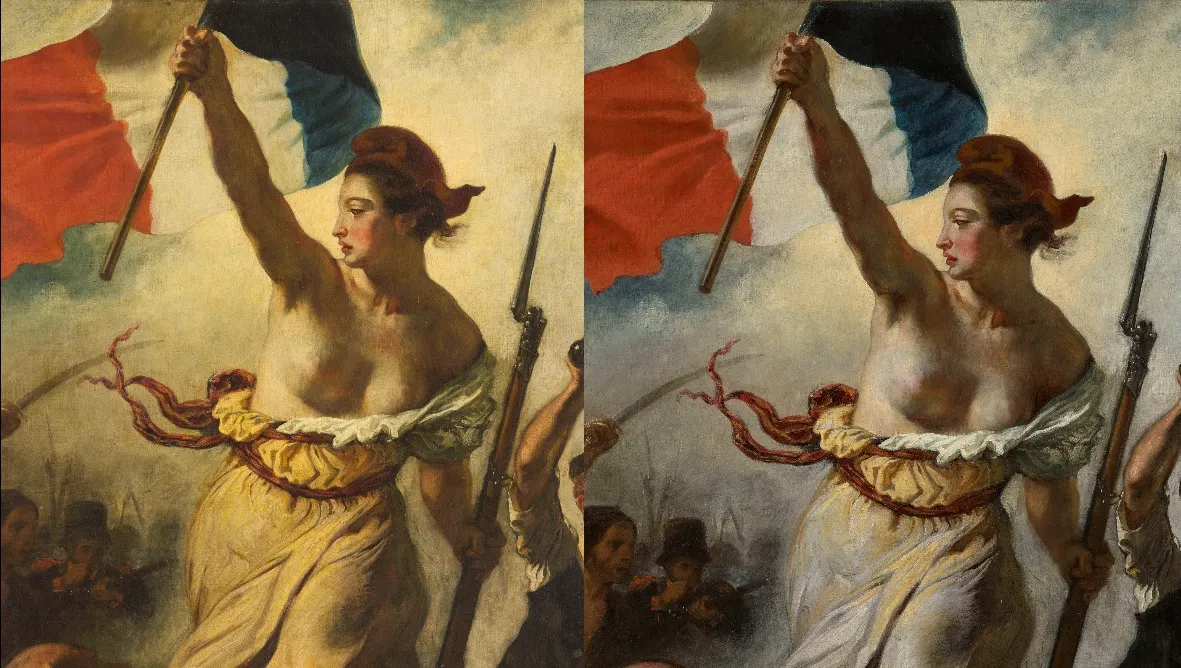
Initially thought to be uniformly yellow, the restoration revealed that Delacroix painted the tunic in gray and then added a golden yellow in varying densities, creating a gradient effect. This deliberate choice adds depth and highlights Liberty’s figure, among the other colors, evoking the allegorical - almost divine - character of freedom.
Detail : Liberty with the French flag
In fact, Delacroix deliberately excluded green, orange, and violet from his palette, opting instead for a range of grays to create an austere yet nuanced backdrop.
The vibrant blue, white, and red, representing the French tricolor flag, thus stand out boldly, symbolizing freedom and revolution.
The newly restored masterpiece has many other Easter eggs in store for us !
For instance, no one had noticed, before the restoration, the worn leather shoe, abandoned in the corner, at the very bottom left. It was neither hidden nor covered with repainting : the layer of varnish had simply optically blended it in with the paving stones !
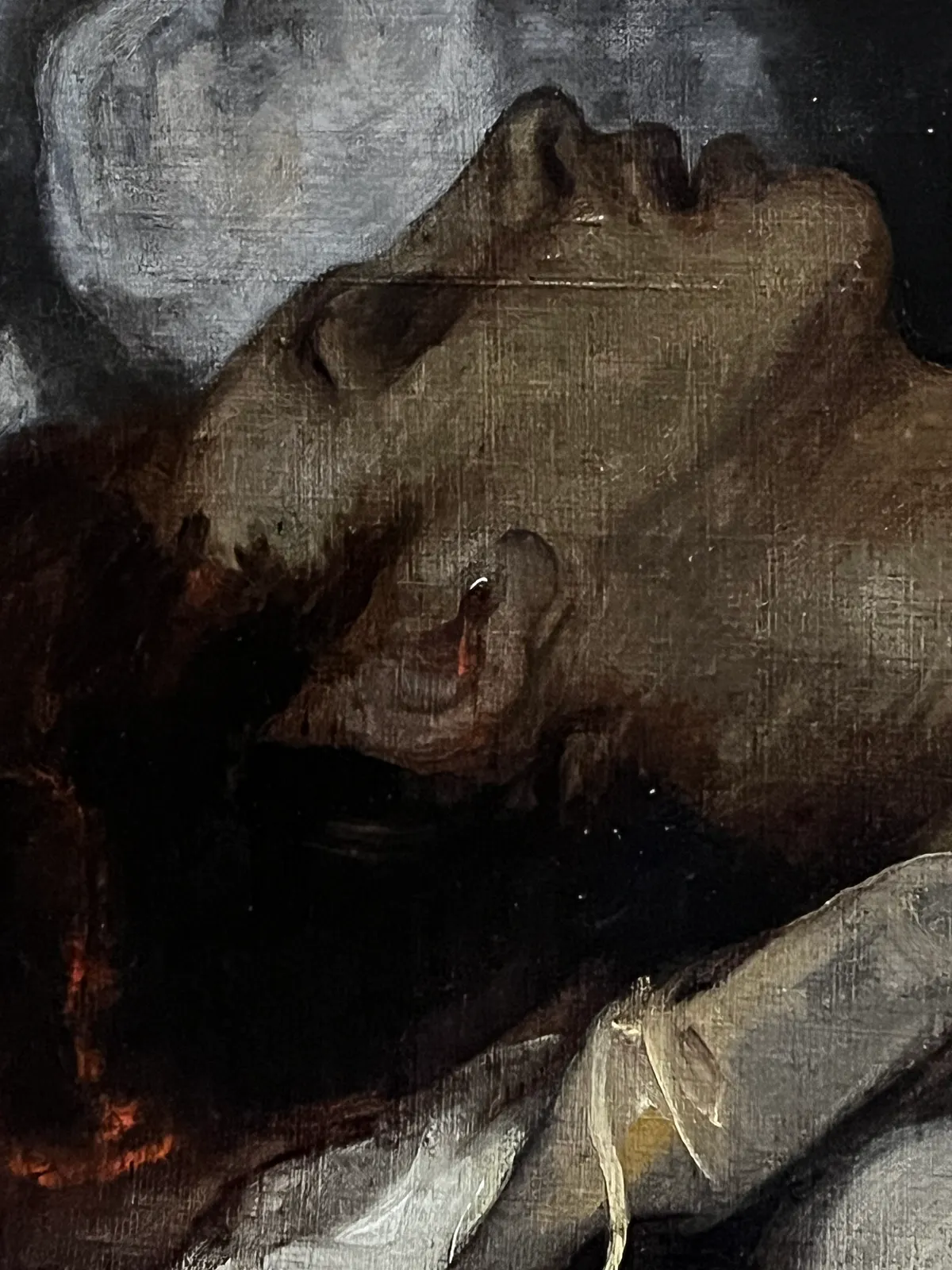
Or that blood, coming from inside the ear of a fallen soldier … We couldn’t see it before !
A Symbol of Resilience and Hope
The restoration of Liberty Leading the People is particularly poignant in today’s world.
When standing before Delacroix’s masterpiece, you are not only witnessing a work of art but also reliving a chapter in history and reconnecting with the universal ideals that transcend time and place.
While the new generations are facing global challenges and uncertainties, Delacroix’s message of freedom, revolution, and hope resonates more profoundly than ever.
Liberty Leading the People serves as a reminder of the enduring power of art to inspire, uplift, and unite humanity in the pursuit of a better future !
Before & After the restauration
Spot the differences !
Of course, while being impressive, this photography of the Delacroix’s masterpiece doesn’t do justice to the restauration
So come and visit Liberty, in the Louvre. I’ll be your guide, and we’ll spot these differences together, among other incredible stories hidden in the museum !
Official sources
It’s in French, buuut you’ll find more beautiful pics in the links !
With your permission, we use Google services to measure our
audience and to see whether our advertising reaches the right
travelers. You are free to accept, to decline, or to choose
for yourself. You can read more in our
Privacy Policy.
Privacy
Cookie preferences
Choose what you are comfortable with. Your
choice is saved and you can change it at any time.
Strictly necessary
Required for the site to function and to
remember your privacy choice. These are always on and set no
advertising cookies.
Always on
Audience measurement
Google Analytics, to understand which pages
interest visitors.
Advertising
Google Ads, to measure whether our adverts
reach the right travelers and to avoid showing them needlessly.