Kings & Gods of Mesopotamia
The cradle of civilization, from the first cities of Sumer to the great empires of Assyria and Babylon.
Long before Greece and Rome, long before Egypt reached its height, the cities between the Tigris and the Euphrates were already writing history. Quite literally: the first writing system, the first code of law and the first epic poem were all born here, in the land we call Mesopotamia.
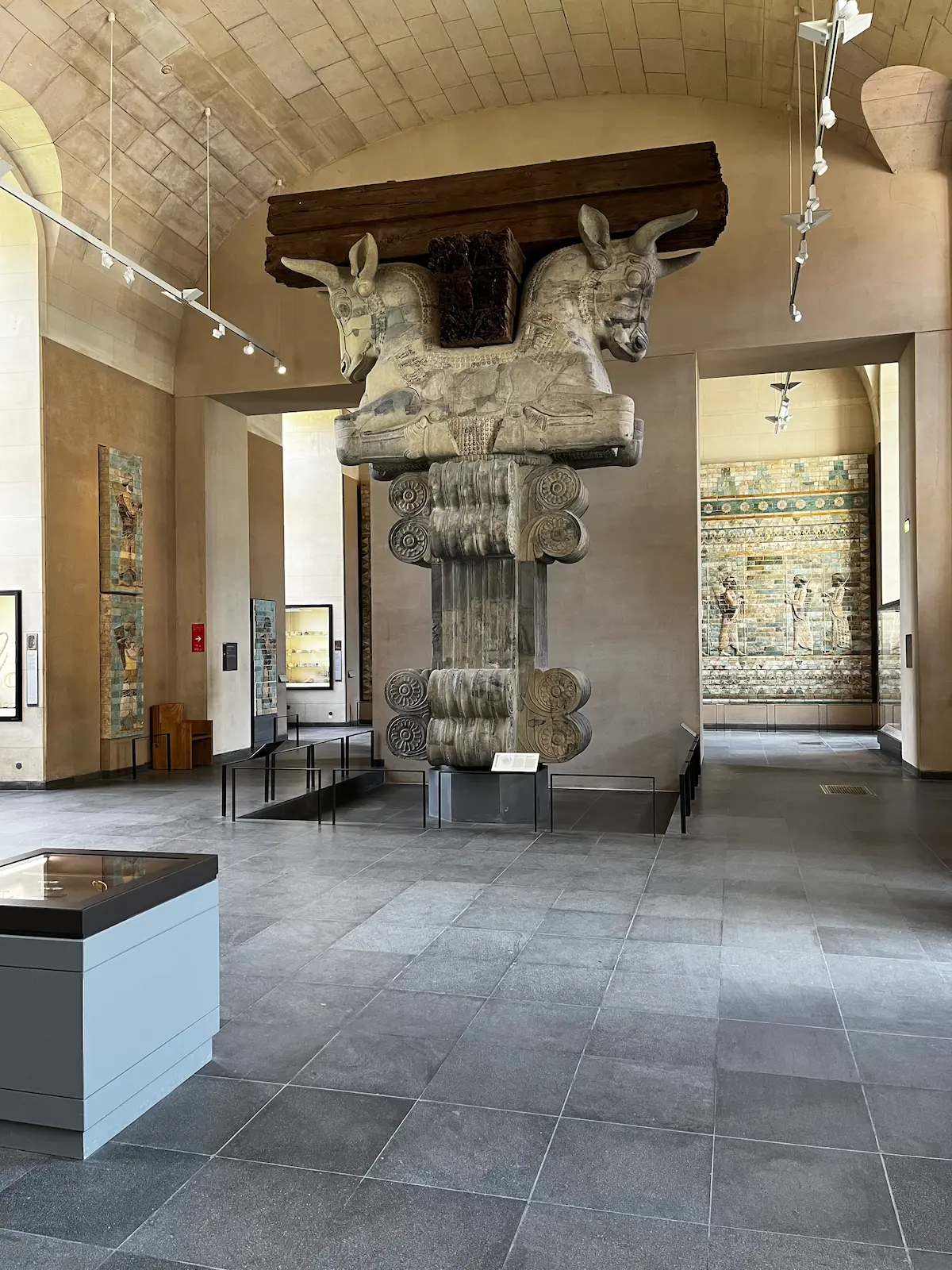
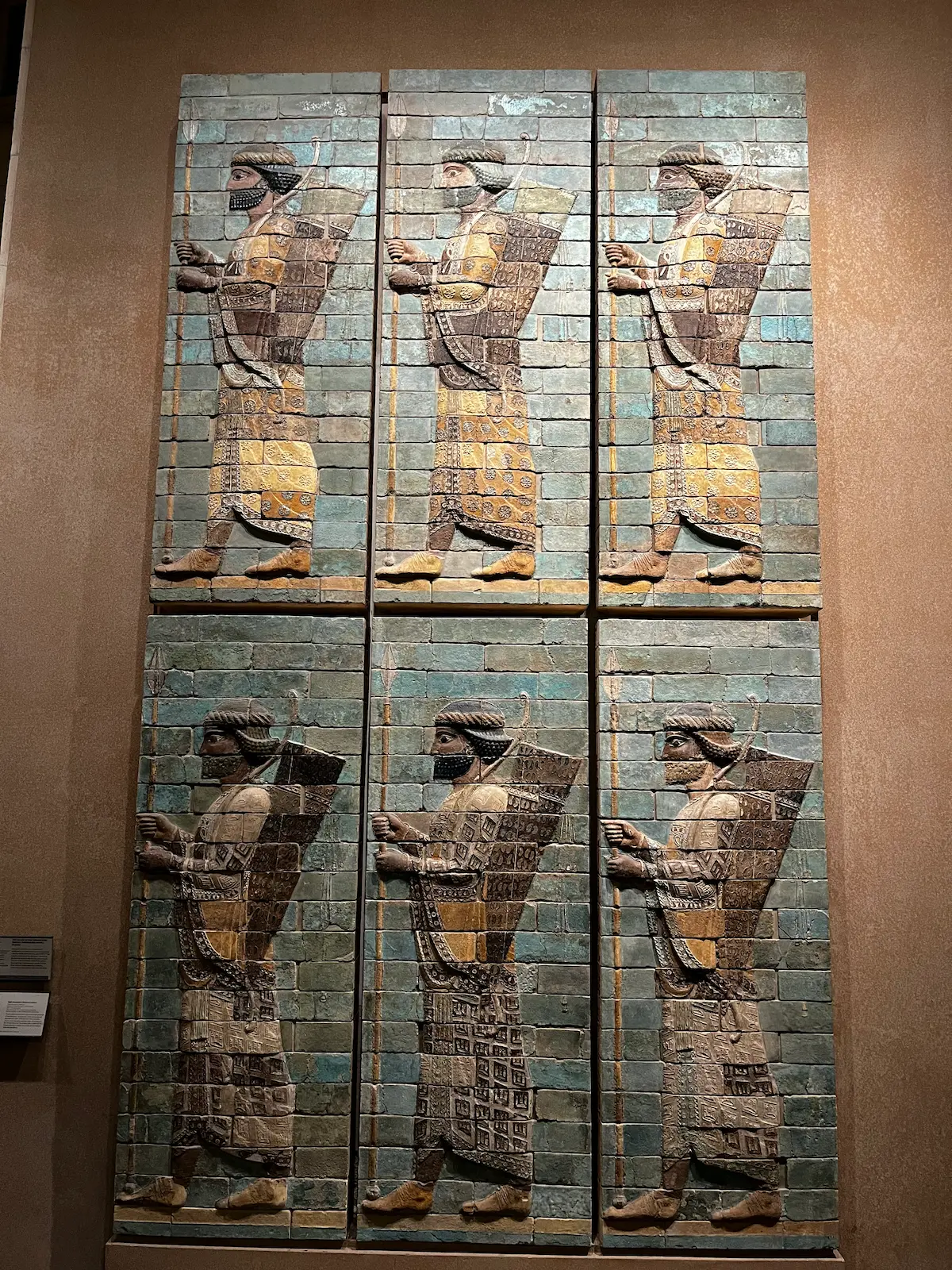
The Louvre holds one of the finest Mesopotamian collections in the world, from colossal Assyrian reliefs to the glazed-brick friezes of the Persian palaces. This tour brings that distant world close enough to read.
What you will see
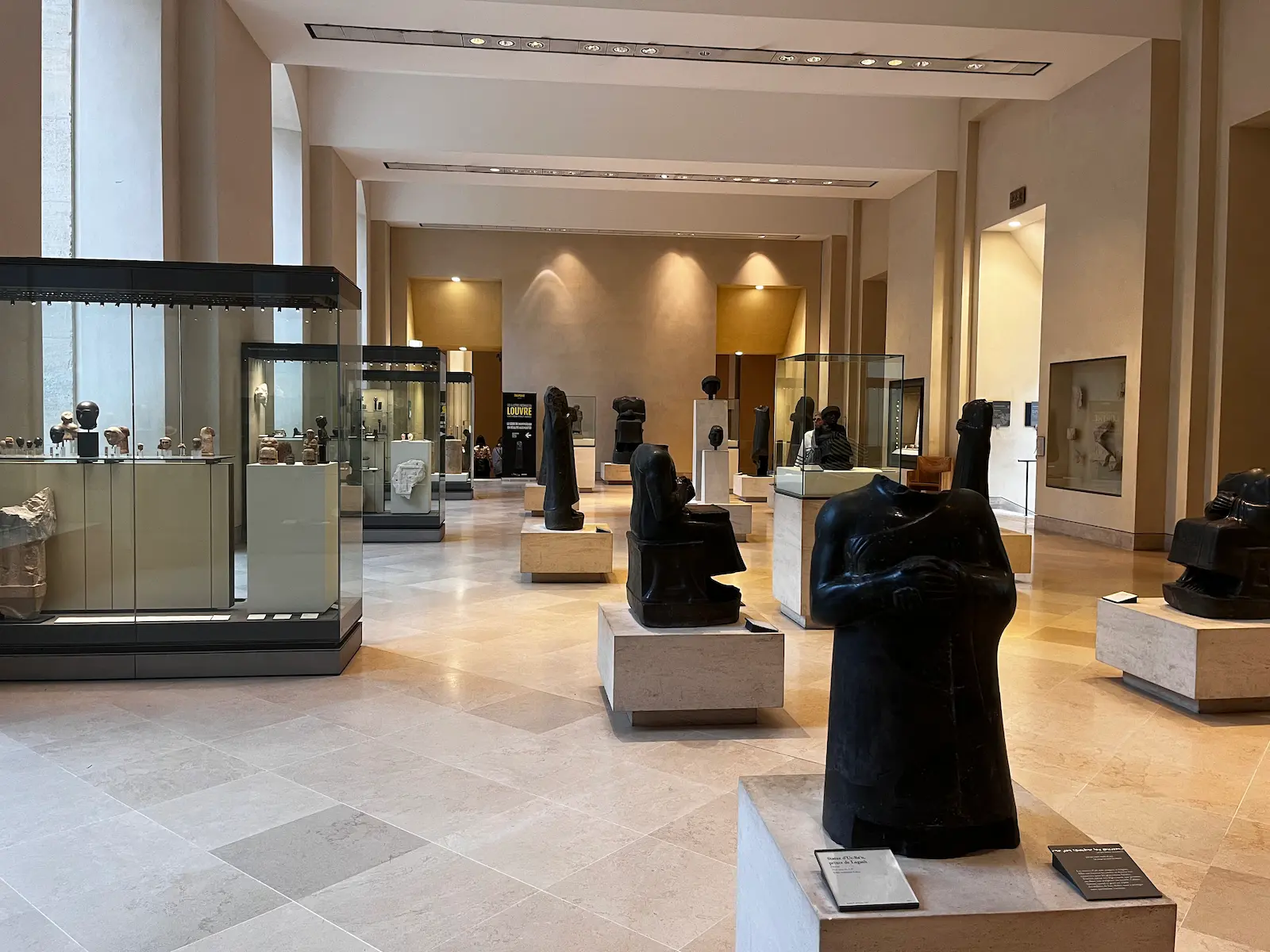
We follow the thread of the ancient Near East as it unfolds: the first cities of Sumer and the birth of cuneiform writing, the law and ambition of Babylon and the code of Hammurabi, the palace archives of Mari, the sheer power of Assyria, and the splendor of the Persian empire that drew it all together. Along the way we meet the figures who give these galleries their pull, from the wide-eyed votive statues of Sumer to the human-headed bulls, the lamassu, that once guarded a royal gate.
The tour is made for the curious rather than the specialist. No prior knowledge is needed, only an appetite for a world most visitors walk straight past. It also tends to land well with families, for whom the scale and strangeness of this art makes a lasting impression. If a particular civilization or object draws you most, say so when you inquire, and we will build the visit around it where we can.
Sumer · Mari · Babylon · Assyria · Persia
Pépin's advice
Two threads at once. The visit runs in chronological order, from the first cities of Sumer to the Persian empire, and it follows the Louvre's own story alongside it. The sites we walk through, Khorsabad, Tello, Susa, are the ones French archaeologists excavated in the nineteenth and twentieth centuries, which is why so much of this world ended up in Paris.
Come without homework. The pleasure here is discovery. These rooms reward fresh eyes far more than a memorized list of names, and the stories carry themselves.
Pair it with Egypt. The Mesopotamian and Egyptian galleries sit in the same wing. If the ancient world is what draws you, the two together give a fuller picture of everything that came before Greece and Rome.
Good to know
The Louvre does not open every gallery every day. The museum is closed on Tuesdays, and the rooms for this tour also rest on Mondays and Wednesdays. Any other day works well, which is why we steer your visit there. Very occasionally a room opens late, or not at all, for operational reasons the museum does not announce in advance. If that happens it is beyond anyone's control, and we simply turn to another part of the collection so your time is never lost. With more than thirty-five thousand works on display, the Louvre is never short of something remarkable, and a private guide can reshape the visit on the spot in a way a fixed group tour never could.