Last week, the Parisian daily newsletter L’essentiel asked its readers which Paris bridge was their favorite.
The result was overwhelming : 65.7% of readers chose the Pont Alexandre III, far ahead of the Pont Neuf (19.6%), the Pont des Arts (7%), the Pont de Bir-Hakeim (5.9%), and the Passerelle Simone-de-Beauvoir (1.8%).
I was invited by the newsletter to comment on these results. Here is my interview, translated into English !
Do these results surprise you ?
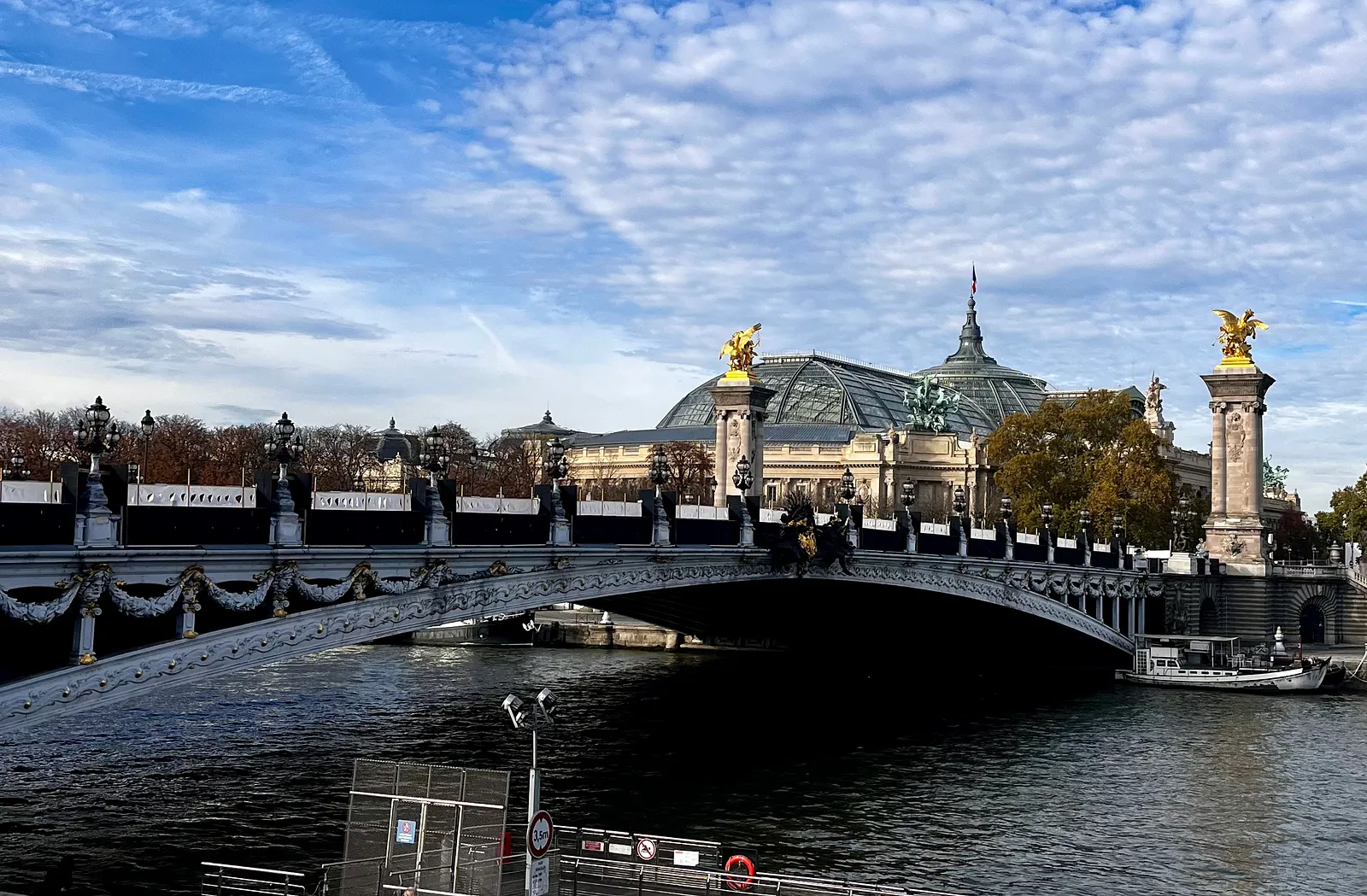
“Along with the Pont Neuf and the Pont des Arts, the Pont Alexandre III is among the most famous bridges in Paris. But visually, this one is even more impressive, monumental. It’s the bridge that travelers mention the most.”
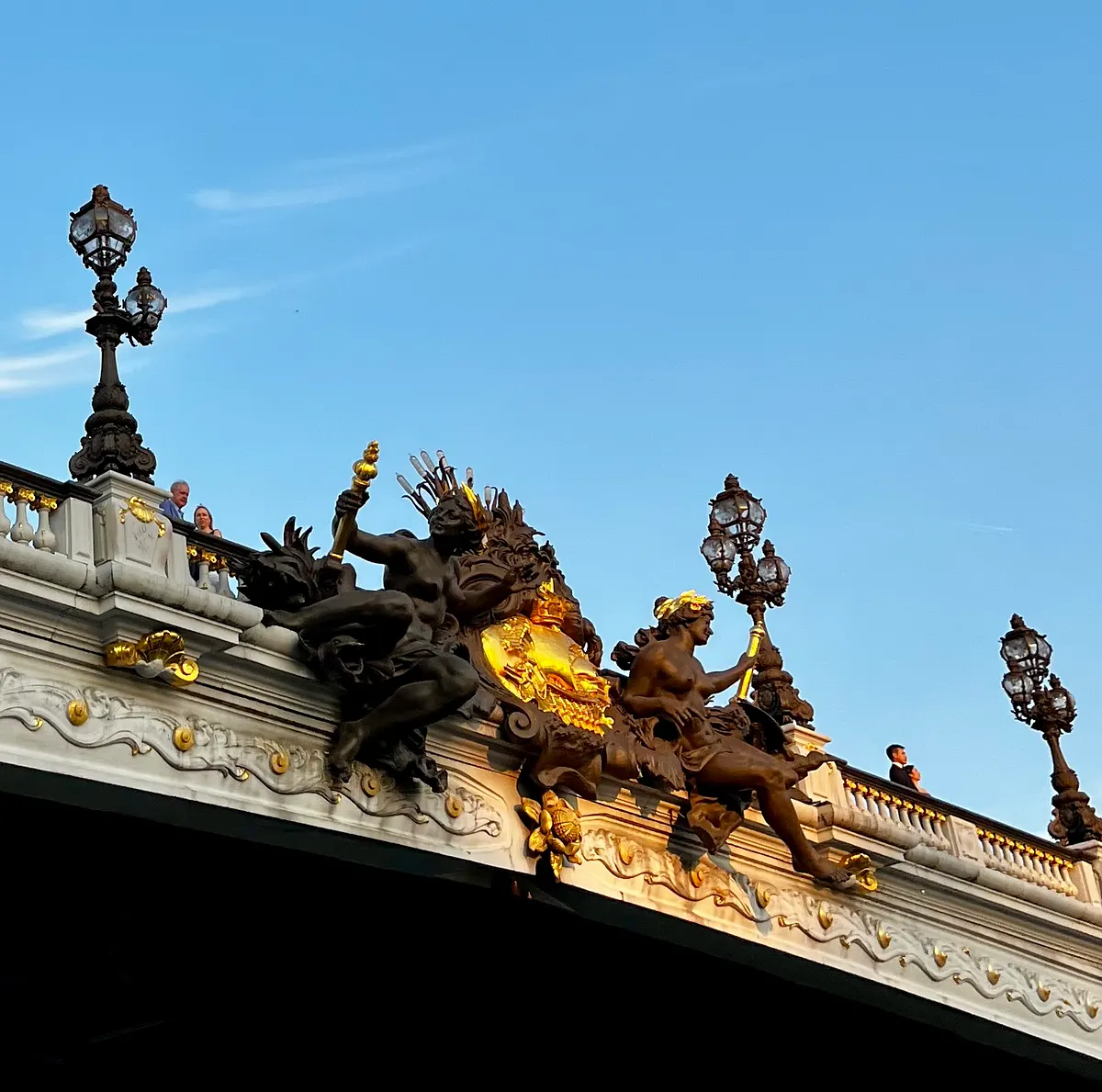
“One of its strengths is its central location : it can be seen from the Invalides as well as from the Champs-Élysées, the two sites it connects, and also from the Seine. It is also one of the most decorated bridges, with statues worthy of the Louvre, covered in gold.”
When and why was it built ?
“Its construction began in 1896 in preparation for the 1900 World’s Fair. It was built alongside the Grand Palais and the Petit Palais, inaugurated at the same time. Much like the Eiffel Tower in 1889, it was meant to showcase France’s greatness, to place the country on a pedestal, and this trio embodies that idea.”
“The bridge had to be quite low, without large cables, in order to preserve an unobstructed view. It was also necessary to maintain harmony in the street heights and to ensure that navigation remained possible. Its construction was expensive but very fast, involving many engineers and architects, including the famous Jean Résal.” (the late 19th century’s very own “Mister Metallic Bridge”)
Why does it have this name ?
“It is a bridge that celebrates Franco-Russian friendship, as the two countries had just signed an alliance treaty in 1892. It is named after Tsar Alexander III, Emperor of Russia and father of Nicholas II. He died in 1894, and never saw the structure.”
“Its construction was also a matter of soft power : the two countries wanted to demonstrate the strength of their alliance. A similar but longer structure, the Trinity Bridge, has spanned the Neva in St. Petersburg since 1903. On both sides of the Pont Alexandre III, there are statues, called nymphs, in honor of the two rivers.” (the Seine and the Neva)
And to train your French, here is the original article published on the 12th of November 2025 : Les origines du Pont Alexandre III, « celui dont les touristes parlent le plus »
So, what about you, which Parisian bridge would you crown as your favorite ?
Is it the shiny Pont Alexandre III ? Or the ancient Pont Neuf (“New Bridge” … ironic for Paris’s oldest bridge, right ? Do you know why it’s called that by the way ?). Or maybe the Pont des Arts, the one once famous for its love locks ?