“ The sky was red, and the light seemed to grow and spread with every moment.
It was in this eternally baleful night that the Fédérés set fires everywhere, leaving only ruins for the victors. A burning, infernal horizon … ”
154 years ago, the uprising of the 18th of March 1871, marked a decisive turning point in the history of Paris and France. On that day, members of the National Guard and part of the Parisian population rose up against the regular troops, taking control of the capital and inaugurating the Paris Commune.
The Paris Commune stands as a pivotal event in French history, decisively accelerating the transition from monarchical and imperial rule to the enduring establishment of the Republic, and representing one of the last major revolutions of the 19th century.
Historical context
The context of this insurrection is complex and deeply rooted in the events of the time.
After France’s defeat to Prussia at Sedan on the 1st of September 1870, the Third Republic was proclaimed, but the provisional government, led by Adolphe Thiers, relocated to Versailles, the “city of Kings”, far from the besieged capital. Paris endured a four-month siege, until a final armistice was proclaimed at the end of January 1871, against the will of the Parisians, and that imposed difficult conditions on France, including the annexation of Alsace and Lorraine.
This move fueled the resentment of the French and Parisians, who wanted to continue the fight, and felt abandoned and betrayed by the new government of Versailles.
Following the examples of the cities Lyon and Marseille, Paris is thinking of revolting.
The Paris Commune
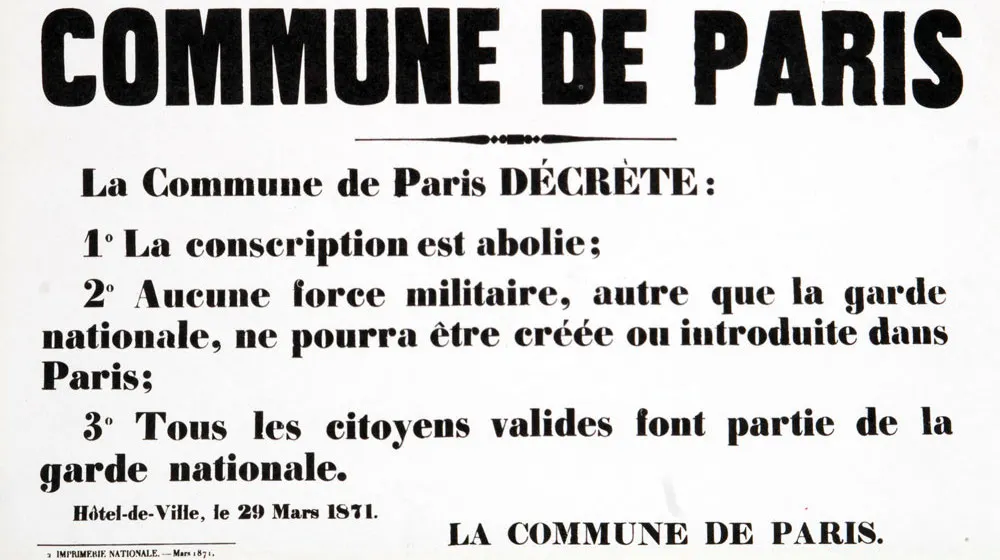
On the 18th of March 1871, tensions reached a breaking point. Thiers was determined to restore order in Paris and attempted to seize the cannons of the National Guard, a local militia formed during the French Revolution of 1789 and often used as a reserve military force. It was met with fierce resistance, as Parisians rallied to protect their artillery, repelling the regular army.
Two Generals were executed, and the Fédérés, a united force of the National Guard and the Parisian people, took control of the city, marking the beginning of the Paris Commune.
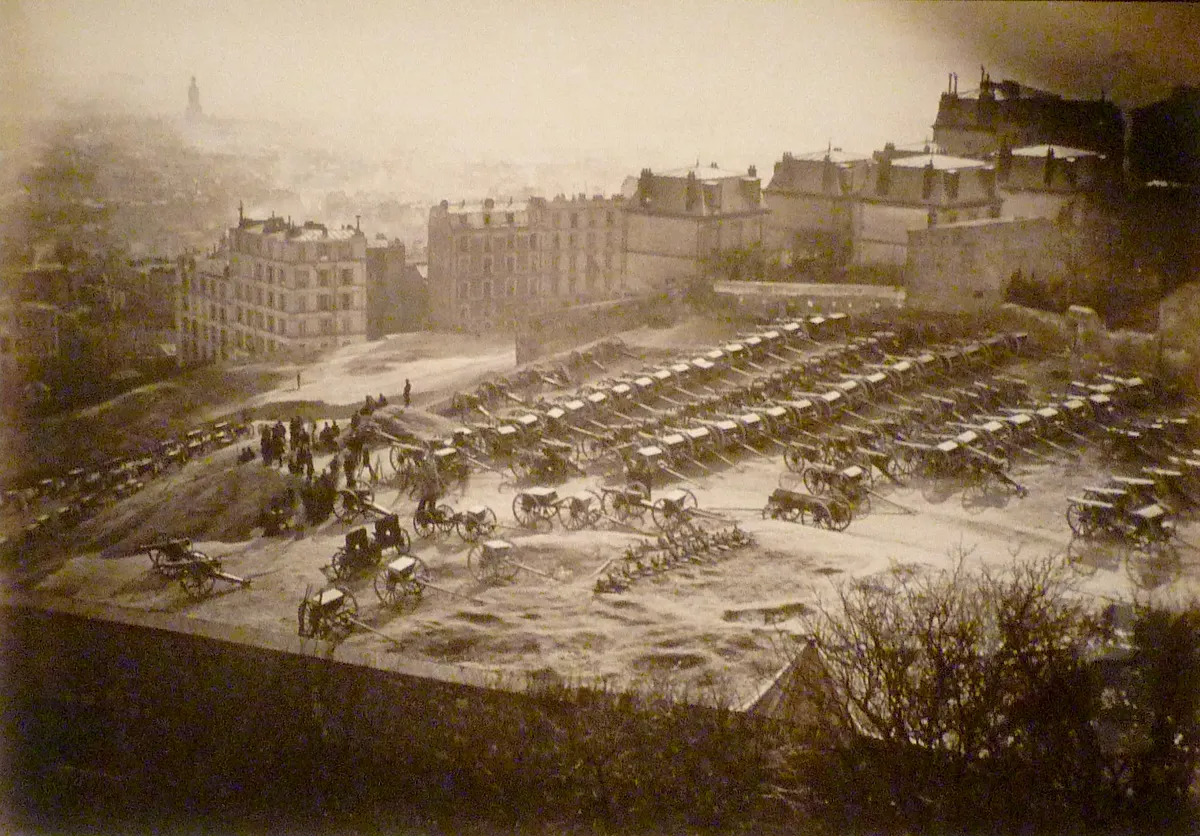
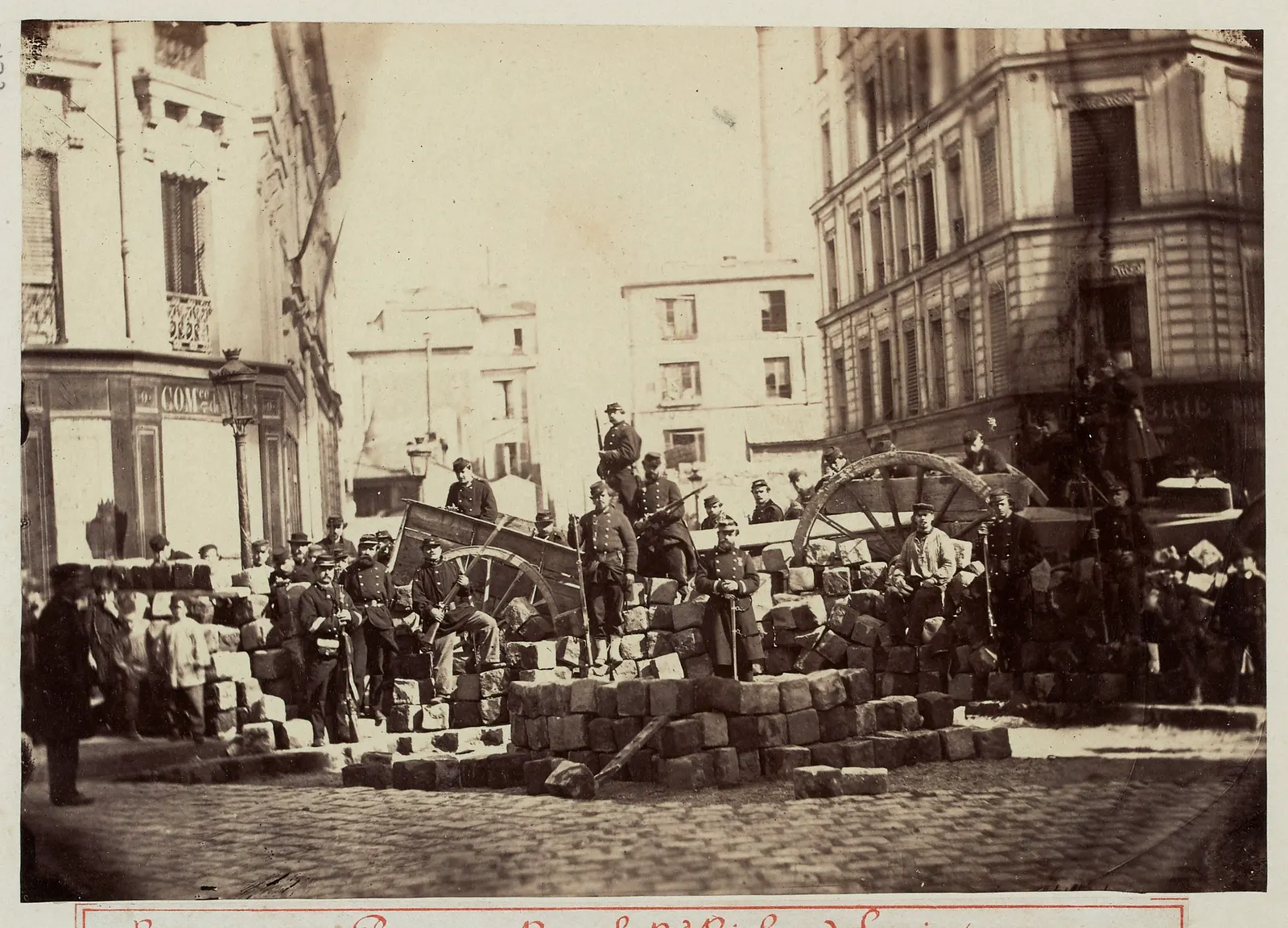
The Paris Commune was characterized by the widespread construction of barricades, which became powerful symbols of popular resistance against the Versailles troops.
These improvised fortifications, built from cobblestones, furniture, and any available materials, transformed the streets of Paris into a defensive labyrinth. The barricades served both as ramparts against the advancing soldiers and as rallying points for the Communards, the name given to the Parisians who participated in the insurrection.
The Bloody Week
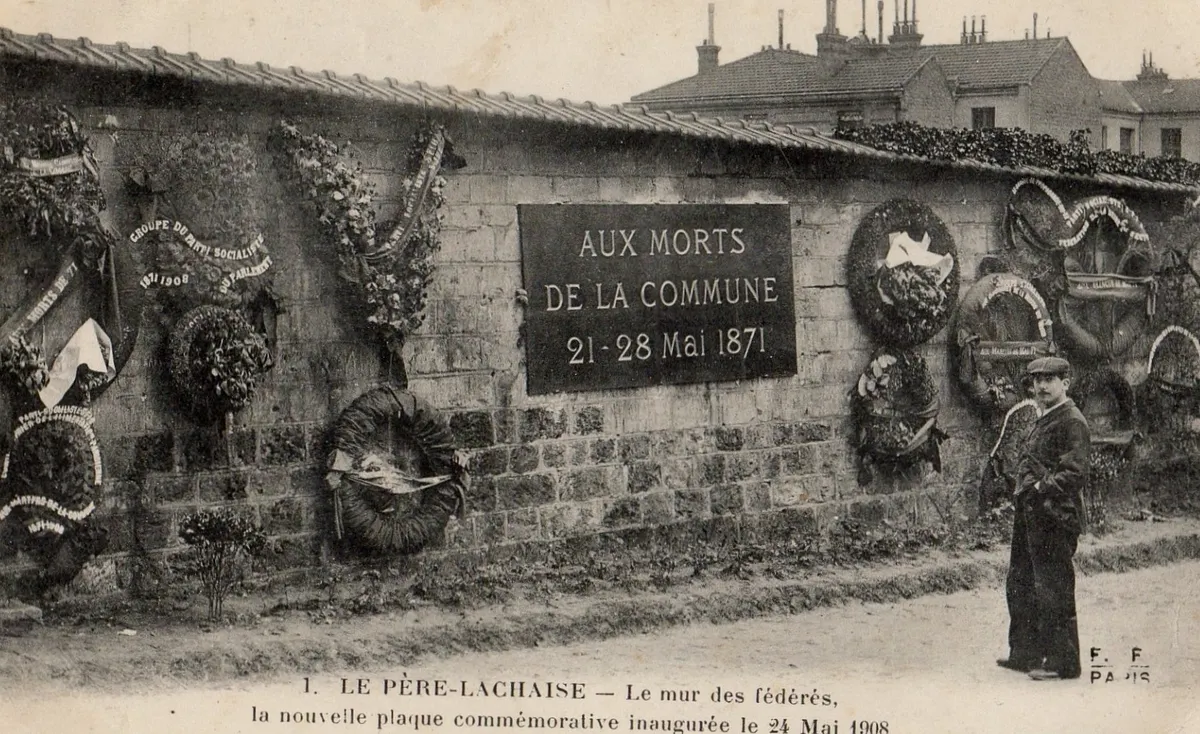
The Paris Commune was brutally crushed during the Bloody Week, from the 21st to 28th of May 1871. The Versailles army recaptured Paris, resulting in the deaths of thousands of Communards.
During that last week of the Commune, fires ravaged Paris, destroying iconic monuments such as the Tuileries Palace, the Palais-Royal, the Palace of Justice, and the City Hall. These fires, set by Communards in desperation, marked both a strategy of resistance and an act of symbolic purification. They also served to protect the Communards’ barricades against the advance of the Versailles army.
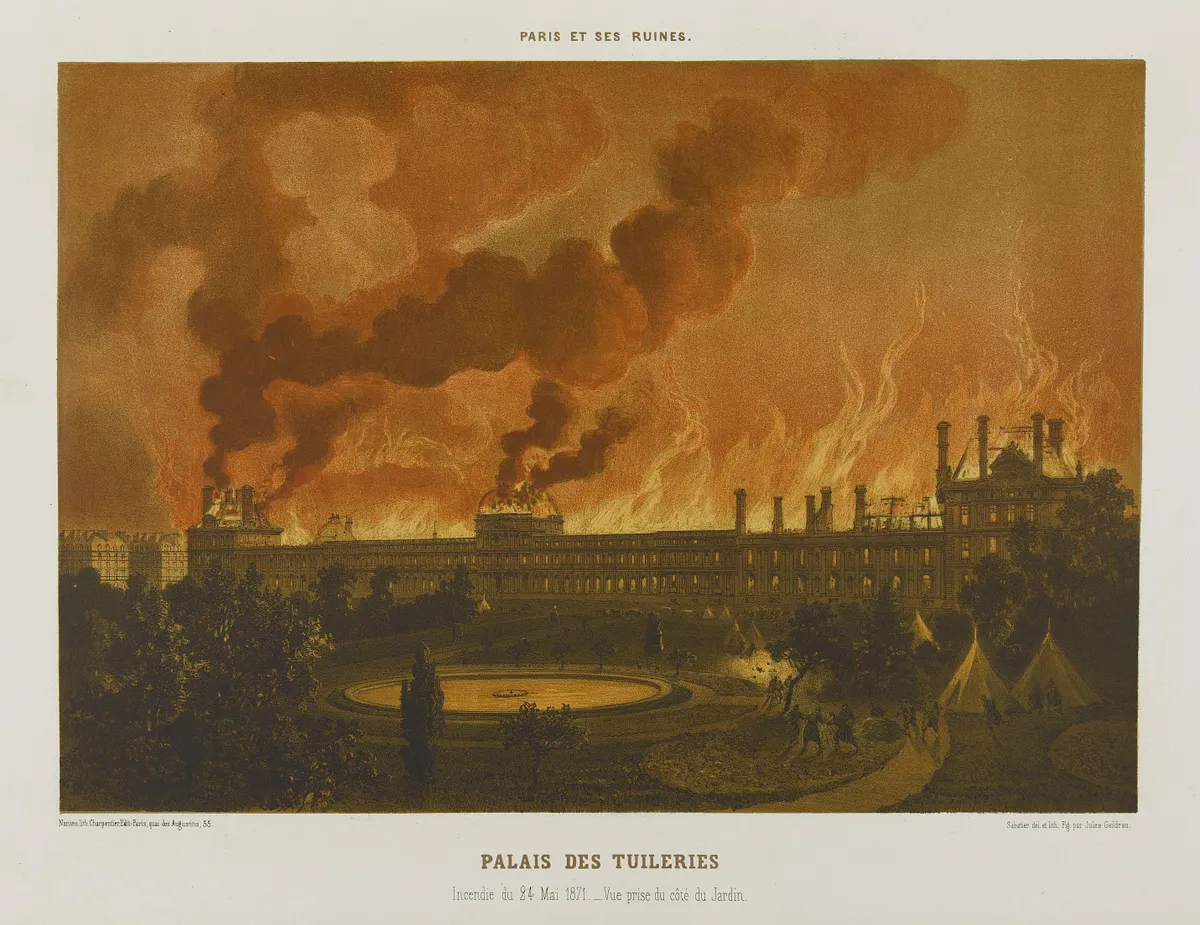
Unlike other structures destroyed during the Commune and subsequently rebuilt, the Tuileries Palace was never restored. Its ruins remained visible for a decade, prompting debates about its fate : should it be meticulously reconstructed, replaced with a new building, or simply demolished ? Ultimately, the ruins were razed in 1883, creating the Tuileries Garden as it exists today, and providing an unobstructed view from the Louvre to the Arc de Triomphe.
An long-term impact
Despite its brief existence, the Paris Commune left a deep scar in the collective memory, and had a profound international impact, inspiring labor and revolutionary movements worldwide with its ambitious program of social and political reforms. The Commune remains a reference for libertarian movements and supporters of direct democracy. The significant role played by women during that revolution, with iconic figures like Louise Michel, is also a defining feature.
Learn more
Looking for more information about the Paris Commune ? I recommend you to visit the website of the Association of the Friends of the Paris Commune. Created in 1882 by the Communards returning from exile, this association is the oldest organization of the French workers’ movement.
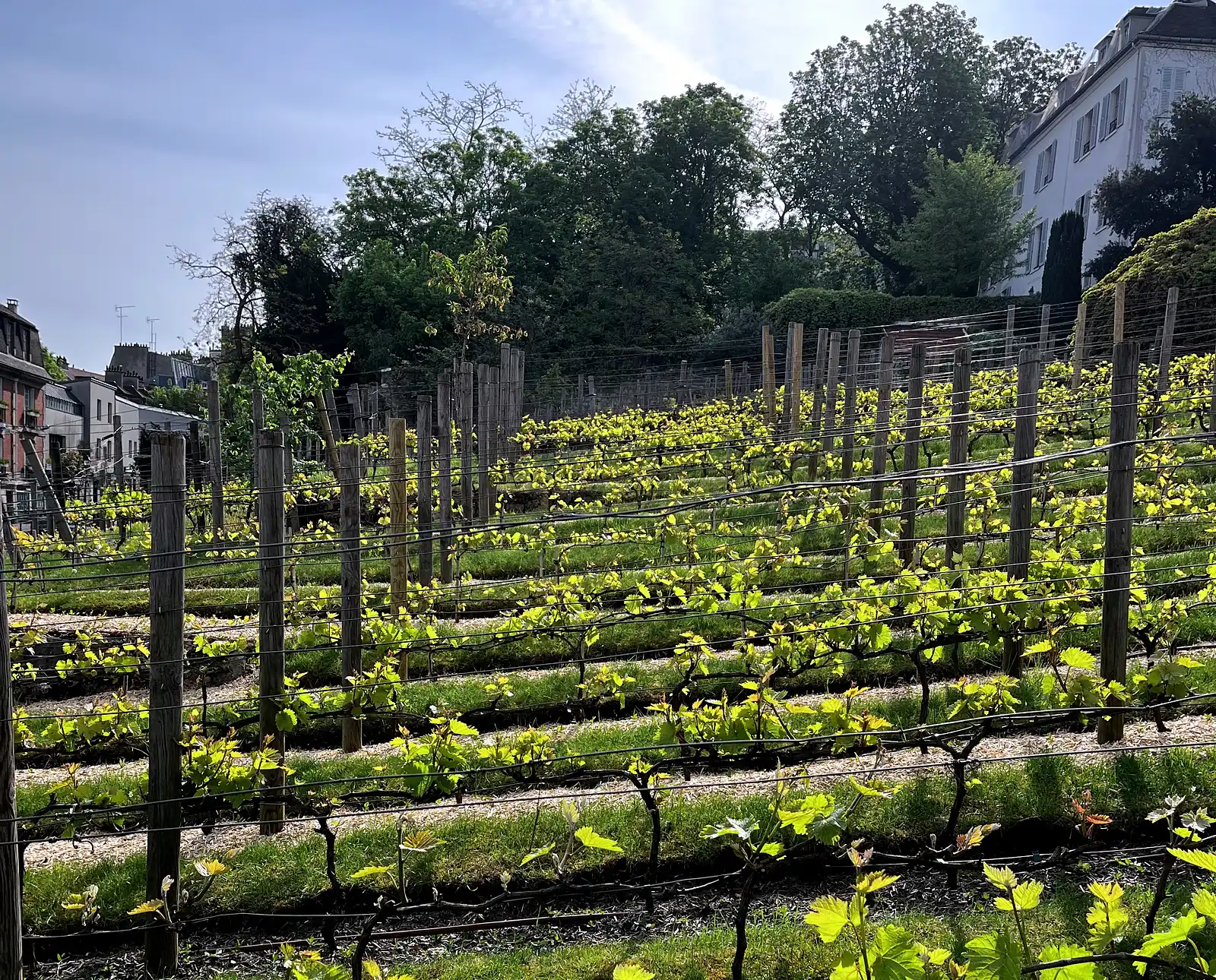
Looking for a tour ? I recommend you to follow tours either in Montmartre (where it started), or in the Père Lachaise cemetery (where it ended for a lot of Communards).